
TASK CONTEXT
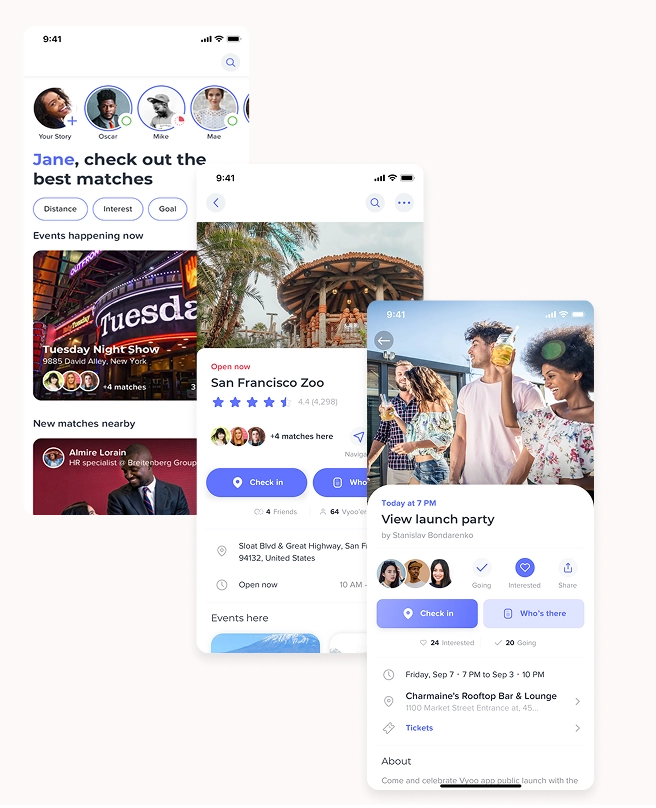
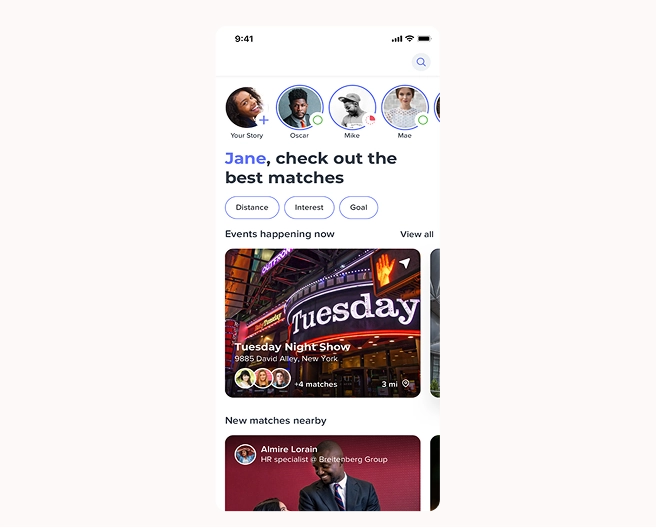
VIEW is a social networking product. Targeted at a young audience. The main feature is finding people nearby and participating in local events.
Have you often noticed that you are missing out on an interesting event in your city? That is exactly what we were wondering about. And focused on solving this problem. Now you won't miss a thing, because all the interesting events are in one place, and a smart AI will be sure to invite you to the most curious ones that are just right for you.
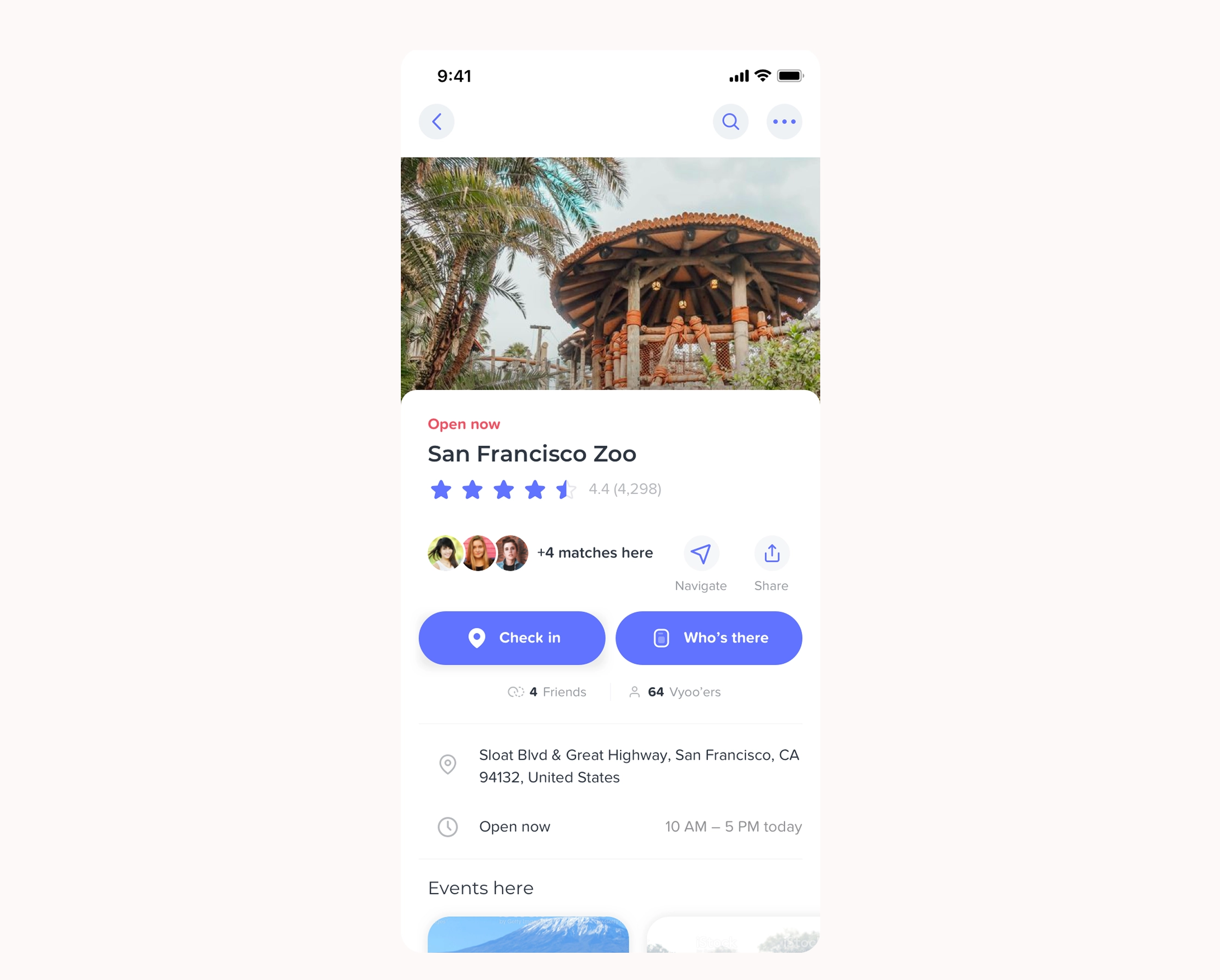
VIEW finds interesting people near you and then suggests attending a cool event together. At the same time, we do not forget about the convergence of common interests. Do you and a person 5 kilometers away from you love modern art? VIEW will suggest that you go to a new museum exhibition right now. Or you can message each other and go there together later.
PROBLEMS
- Missing relevant local events due to information noise
Users miss interesting events in their city because information is scattered across various sources (social media, event listings, chats, websites, recommendations from friends). Even if a person wants to find events, they are forced to monitor a multitude of channels and filter out spam and irrelevant offers. As a result, most events go unnoticed, and the user experiences FOMO (fear of missing out) and frustration that "everything passed them by again."
- Attending events alone as a barrier
Even when a user finds an interesting event, they often do not go because they do not want to go alone. Young audiences experience social discomfort when attending exhibitions, concerts, lectures, or film screenings alone. It is not always possible to invite friends (different interests, schedules, geography). As a result, a potentially interesting event is ignored not because of a lack of time or money, but because of a lack of company.
- Inefficient search for "neighbors" with similar interests
Existing dating and networking applications are focused either on romantic encounters (Tinder, Bumble), professional connections (LinkedIn), or friendship without regard to geolocation and shared activities. It is difficult for a user to find someone nearby (within a 5–10 km radius) who shares a specific interest (contemporary art, indie music, squash, board games) and is also willing to attend a specific event together. Matching algorithms are either too generic (just matching) or ignore geography and context (time, place, event type).

LIMITATIONS
Limitation #1. Geolocation privacy
The user's exact location must not be shown, only an approximate area. Flexible privacy settings (an "incognito" mode, visibility control) are needed for protection against stalking.
Restriction #2. Incompleteness and heterogeneity of event data
Events are sourced from various channels (APIs, partners, users) with varying levels of information quality and availability. The design must be prepared for missing data and the impossibility of obtaining a perfectly complete event listing.
Constraint No. 3. Cold start of AI recommendations
Initially, the AI does not know the user's tastes and provides inaccurate recommendations. The design should explain this, allow for explicit specification of interests, and provide feedback ("why it doesn't fit") so that the algorithm can learn.

GOALS
Goal No. 1. Centralization of local events
To gather all interesting events in the city in one place so that the user stops monitoring disparate sources and doesn't miss anything.
Goal #2. Finding a company to attend events together
Find users nearby with matching interests and suggest going to a specific event together, solving the "I don't want to go alone" problem.
Goal #3. Personalized AI recommendations
Configure a smart algorithm that takes into account the user's interests, geolocation, free time, and budget to suggest only relevant events and companions for outings.

MY ROLE
In the VIEW project, I served as a UX/UI designer. My tasks included: designing an event feed with AI filtering, creating a "people nearby" search interface that accounts for geolocation privacy, developing a "suggest going together" mechanic, and balancing the recommendation system with user control.
HYPOTHESES
Hypothesis No. 1. Centralizing events reduces FOMO
If you collect all local events in one feed with smart filters, users will stop missing interesting events because they won't have to monitor 5+ different sources.
Hypothesis No. 2. AI-powered company matching increases attendance
If the application finds people nearby with matching interests and suggests going to an event together, the percentage of planned outings (that actually take place) will increase by 30–40%, because the user does not feel uncomfortable attending alone.
Hypothesis No. 3. AI transparency increases trust
If you show the user why the AI recommended a specific event or person ("you both like jazz and live 2 km away"), the acceptance of recommendations will increase by 25–35%, because the user trusts logic they understand, rather than a "black box."

KEY SOLUTIONS
- Unified event feed with AI filtering
Aggregate events from all sources into a single feed, where AI automatically sorts them by relevance (interests, geolocation, time, budget), and the user can switch between "Recommendations" / "All events" / "Nearby" modes.
- Nearby people map with privacy mode
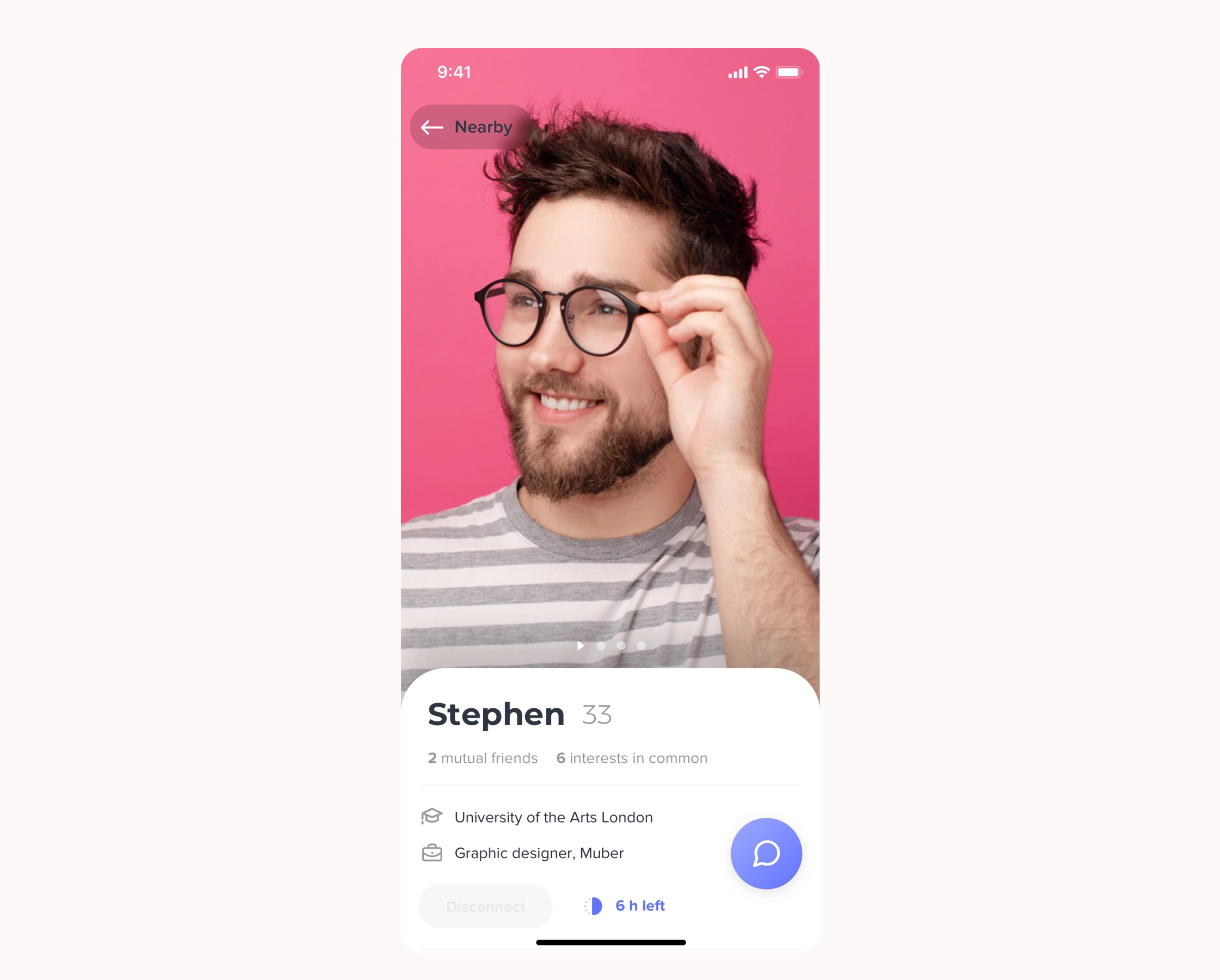
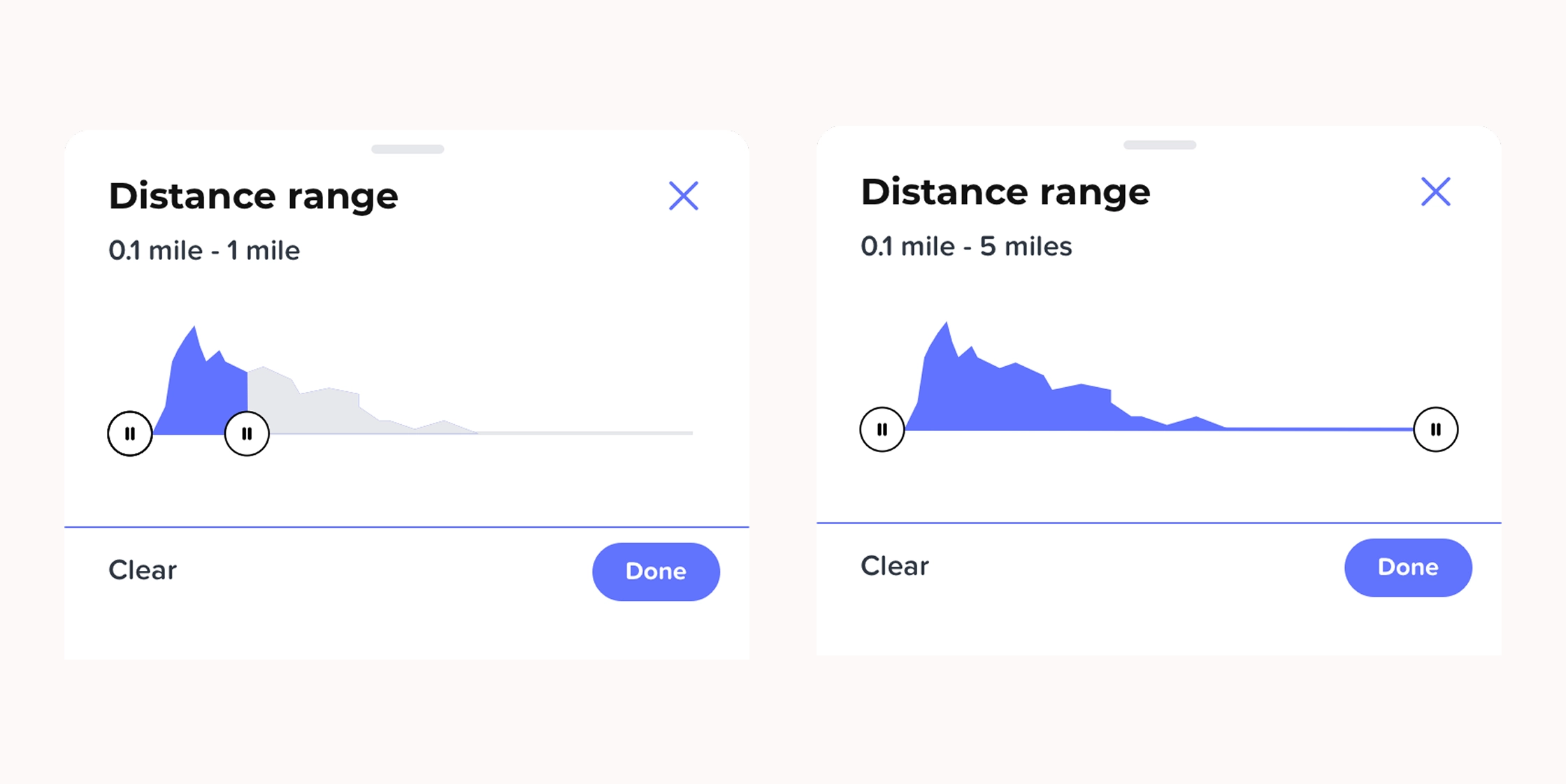
Display users on the map not as dots, but as "heat zones" (1–5 km radius) with the option to enable "incognito" mode. If interests match — an "Offer to go to an event" button, which sends a link to a specific event.
- "Go together" (Match & Go) mechanic
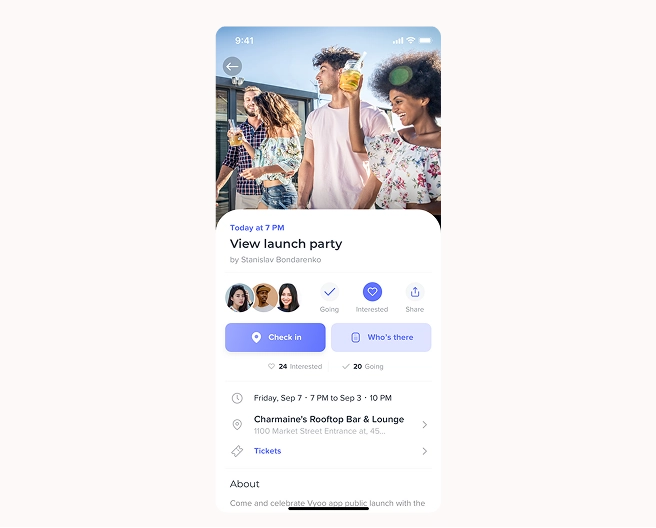
In case of mutual interest (both users marked the same event as "want to go") — an automatic notification and opening of a chat with a suggestion to choose a time. If both agree — booking tickets/seats (integration with partners) or an event reminder.
- Transparent AI with feedback
Each recommendation is accompanied by an explanation ("because you are an indie music fan" / "this user was also at the Pollock exhibition"). Below each card are "Why doesn't it fit?" buttons (too far, too expensive, not interested, busy), which train the AI and improve future recommendations.

RESULTS
Result No. 1. Reduction in the number of missed events
Users have stopped missing interesting local events — thanks to a unified AI feed, event reach per user has increased by 50–60% compared to monitoring disparate sources independently.
Result #2. Growth in actual attendance
The number of users who not only found an event but actually attended it increased by 30–40% — thanks to the "Go Together" feature, which removes the barrier of attending alone.
Result No. 3. Increasing trust in AI recommendations
Implementing transparency (explaining "why it is recommended") and the option for explicit feedback increased the acceptance of recommendations by 25–35%, and the number of complaints about "strange/irrelevant" suggestions was cut in half.
Result No. 4. Geolocation safety and comfort
The balance between finding people nearby and privacy (warm zones instead of exact points, "incognito" mode) has allowed us to reduce geolocation opt-outs to a minimum — 85% of users keep geolocation enabled, with 0 stalking incidents in the first 3 months.